Co-Instructor
2. Environmental Field Skills (Undergraduate) - Spring 2024 & 2025
Focus: This practical, field-based laboratory course is designed to provide hands-on experience with environmental monitoring field techniques, including stream discharge measurements, slug tests, aquatic sampling, surveying and wetland delineations utilizing local sites and watersheds as the classroom.
I co-teach this four-section course (12 hours per week). My responsibilities include planning and coordinating field activities, designing instructional exercises, leading field and laboratory sessions, and mentoring students in the application of environmental field methods and data collection techniques.
A practical, field-intensive course providing firsthand experience with monitoring methodologies.
Key Objectives:
- Instrument calibration
- Snow survey
- Topographic maps
- Soil moisture and temperature mapping
- River discharge
- Piezometers & wells
- Wetland identification
- Wading discharge measurements
- Wetlands and water quality
- Stream geomorphology
- Channel health evaluation
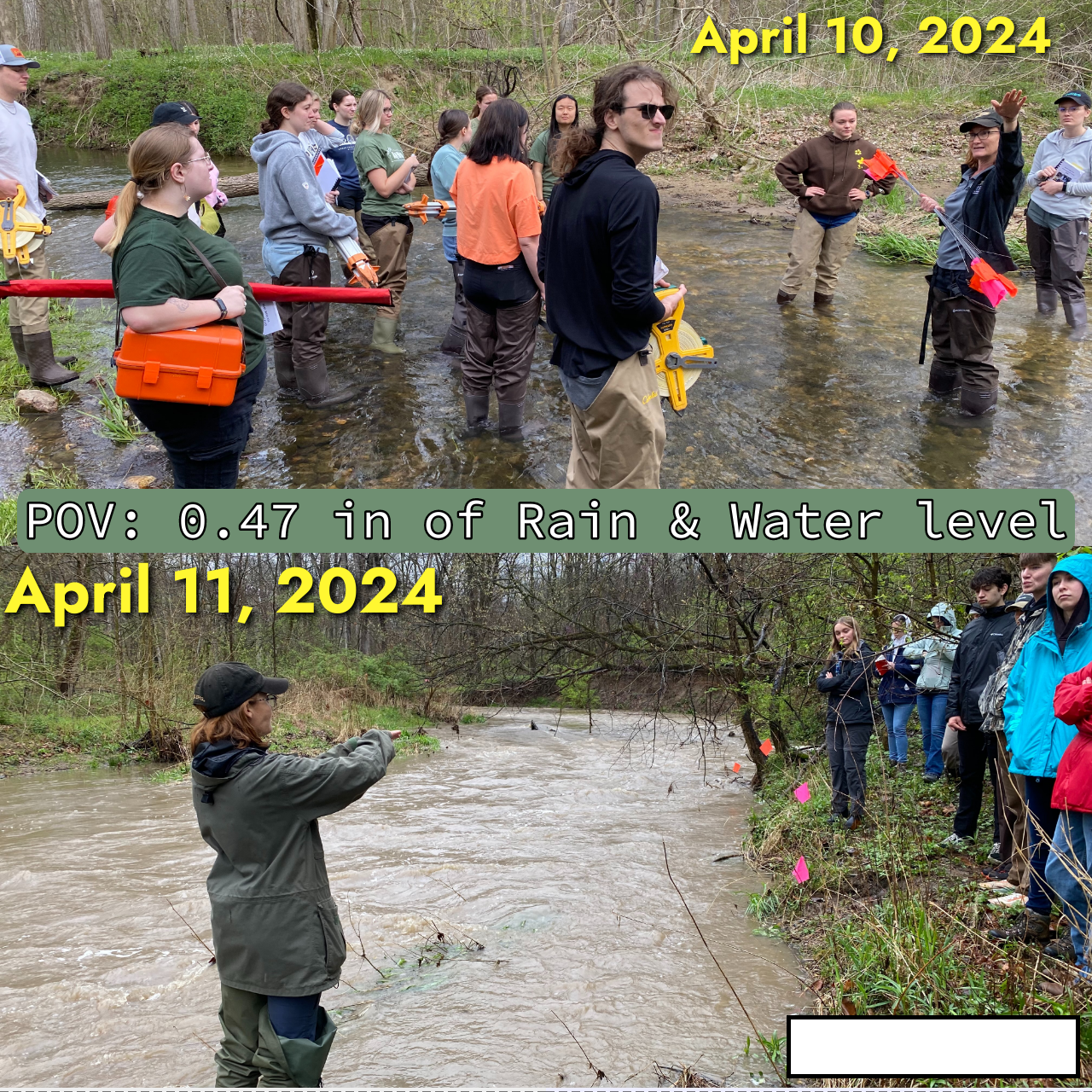 Stream discharge measurement. The stream was flooded due to 0.47 inches of overnight rain.
1. Senior Capstone Design (Undergraduate) - Spring 2024 & 2025
Facilitating multidisciplinary student teams as they tackle real-world environmental issues.
- Service-Learning: Connecting students with community partners for projects like stormwater management and urban gardening.
- Professional Growth: Bridging academia with industry through networking and project-based deliverables.
Teaching Assistant
2. Soil Physics (Undergraduate/Graduate) - Fall 2024
Focus: Fundamentals of transport (water, chemicals, heat, and gases) and field spatial variability.
I assisted with laboratory instruction by designing and leading lab sessions, guiding students through experiments, and evaluating laboratory assignments.
Key Learning Objectives:
- Understand the fundamental physical processes in soils, including water, chemical, and heat transport.
- Calculate key soil physical properties and process rates using appropriate input data.
- Develop practical skills in the principles and methodologies used to assess soil physical properties and processes.
- Understand the principles of soil structure formation, soil health improvement, and their assessment.
- Evaluate how soil physical properties and processes influence crop production and environmental quality.
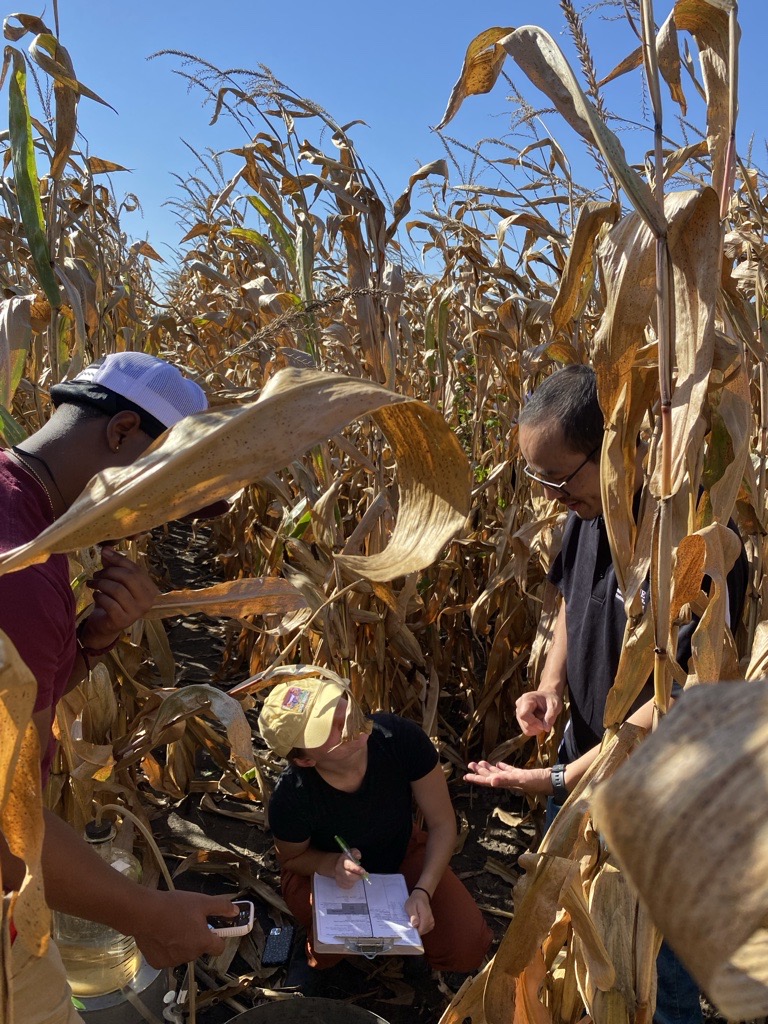 Measurement of soil water infiltration rate
1. R Programming for Data Science (Graduate) - Fall 2021
Introducing students to the modern data science workflow using the R ecosystem.
- Reproducibility: Teaching version control via GitHub and literate programming.
- Visualization: Developing dynamic reports and interactive web applications (Shiny).
- Software Development: Guiding students through the creation and documentation of custom R packages.
Mentoring & Student Success
I take great pride in the professional development of my students. Through personalized guidance and research support, my mentees have achieved significant milestones, including:
- Fulbright Fellowship: Provided primary mentorship for a student successfully awarded a Fulbright Fellowship to pursue a master’s program for international research.
- Summer Internships: Facilitated connections and technical preparation for students securing competitive internships at federal agencies and environmental consultancies.